IRC Chapter 10 · R1003.9 · Termination
Chimney Height Code: The 3-2-10 Rule
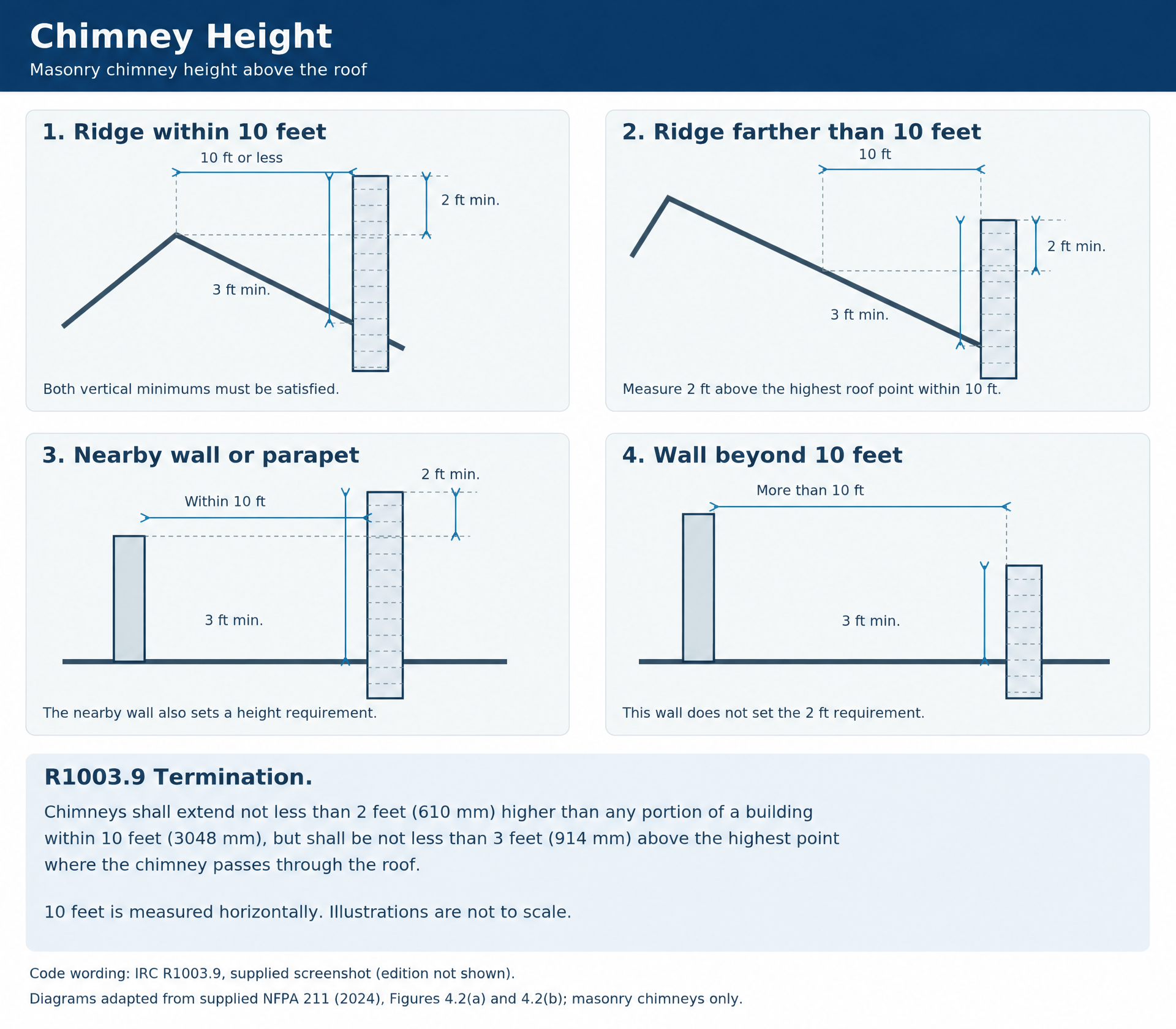
A masonry chimney must extend at least 3 feet above the highest point where it passes through the roof, and at least 2 feet higher than any portion of the building within 10 feet horizontally. Both minimums apply—not one or the other.
What does the 3-2-10 rule mean?
Three feet is the vertical minimum above the highest roof penetration point. Two feet is the vertical difference above nearby building portions. Ten feet is the horizontal distance used to identify which portions must be considered.
Meeting the 3-foot minimum does not automatically satisfy the 2-foot requirement. A steep roof can require a taller chimney.
A ridge within 10 feet—or farther away
When the ridge lies within 10 feet horizontally, the chimney must clear it by at least 2 feet and also meet the roof-penetration minimum. When the ridge is farther away, consider the highest building portion still within the 10-foot range, not only the distant ridge.
Nearby walls and parapets count
A nearby taller wall or parapet is a portion of the building. Within the 10-foot horizontal range, it can set the required chimney elevation. A wall beyond that range does not set this particular 2-foot requirement; the 3-foot roof minimum still applies.
Height is not the whole chimney inspection
Correct termination height alone does not prove a fireplace will draft properly or that the chimney is safe. Flue condition, sizing, obstructions and the fireplace itself also matter. These illustrations are not construction drawings. Do not climb onto your roof to take measurements.
Check the requirements for your fireplace
These explanations concern masonry fireplaces and chimneys. Listed factory-built systems have their own listing and manufacturer’s installation requirements. Your building department determines the applicable code edition and any local requirements; this guide is not a permit approval or a substitute for an inspection.
Read the ICC Chapter 10 referenceChimney and fireplace help in northern Illinois
If you are planning fireplace changes or concerned about the chimney liner, chimney height, combustible framing or the smoke chamber, arrange an inspection. After cleaning, we visually inspect for imperfections and quote any needed repairs afterward, in writing or verbally, before repair work begins.