
Chimney liners · Illustrated homeowner guide
Stainless-Steel Chimney Liner: Diagram & Homeowner Guide
A chimney liner forms the passage that carries smoke and combustion gases through the chimney. A stainless-steel liner can be installed inside an existing masonry chimney as part of a properly selected relining system. This cutaway shows a flexible steel liner serving a masonry fireplace—not a factory-built chimney or a one-size-fits-all installation.
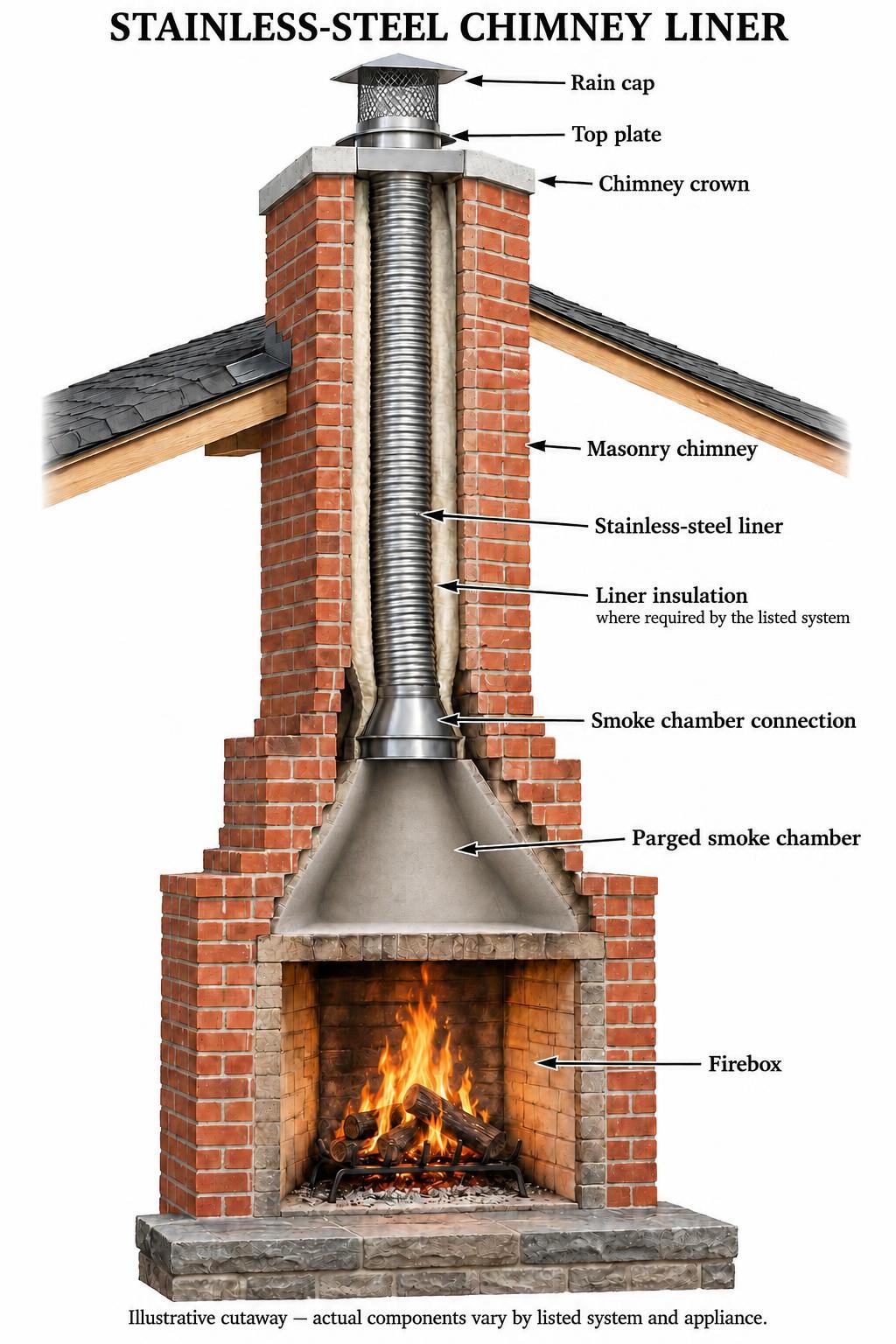
What the chimney liner diagram shows
The rain cap sits above the liner outlet. The top plate closes the opening around the liner at the chimney crown. Inside the masonry chimney, the flexible stainless-steel tube provides a continuous flue passage; the surrounding insulation represents insulation required by the chosen listed system.
At the bottom, this example connects the liner to a smoothly parged smoke chamber above an open fireplace. Parging is the refractory mortar coating on the chamber’s interior; it is separate from the steel liner. A wood stove, insert or other appliance needs its own approved connection arrangement. The masonry, smoke chamber and firebox still need inspection even when a metal liner is present.
Clay tile versus stainless-steel chimney liners
Many masonry chimneys have clay flue tiles, like the terra-cotta lining shown in our homepage anatomy diagram. A stainless-steel relining system is a separate metal passage installed within the chimney. It does not mean that the surrounding brickwork, fireplace or clearances can be ignored.
Stainless steel is not automatically suitable for every fuel or appliance. The liner material, diameter, connections and installation must match the system’s listing and the appliance manufacturer’s requirements. A fireplace chimney and a gas-appliance vent are not interchangeable.
When might a chimney need relining?
An inspection may identify cracked or missing clay tiles, damaged joints, a missing liner, deterioration after a chimney fire, or a flue that does not suit a proposed appliance. These findings can make relining worth evaluating, but a diagram or a symptom alone cannot establish the right repair.
Smoke spilling into the room or poor draft can have several causes, including obstructions, pressure differences and fireplace geometry. Installing a liner without diagnosing the problem is not a reliable cure. Stop using a fireplace that appears unsafe and arrange a professional inspection.
Does a stainless-steel chimney liner need insulation?
Follow the liner system’s listing and installation instructions. Insulation requirements depend on the particular system, use and chimney conditions; a bare steel tube should not be assumed to satisfy the requirements. The illustration shows a wrap for clarity, not a universal insulation specification.
Correct sizing matters too. An undersized liner can restrict venting, while an unsuitable oversized flue can affect performance. There is no single liner diameter or insulation thickness that is correct for every fireplace.
Inspection, cleaning and a repair quote
A stainless-steel liner still needs maintenance. Soot, creosote, obstructions, damaged connections and corrosion can affect a lined chimney. Cleaning and inspection help evaluate its condition; a metal liner is not a guarantee that a fireplace is safe to use.
For homeowners in Cary and nearby northern Illinois communities, Chimney Sweep Master can evaluate chimney concerns and discuss repair options. After cleaning is complete, we visually inspect for imperfections. Any needed repairs are quoted afterward, verbally or in writing, before repair work begins. Liner pricing depends on the actual chimney and scope of work—not a fixed price shown in this guide.
Check the requirements for your fireplace
These explanations concern masonry fireplaces and chimneys. Listed factory-built systems have their own listing and manufacturer’s installation requirements. Your building department determines the applicable code edition and any local requirements; this guide is not a permit approval or a substitute for an inspection.
Read the ICC Chapter 10 referenceChimney and fireplace help in northern Illinois
If you are planning fireplace changes or concerned about the chimney liner, chimney height, combustible framing or the smoke chamber, arrange an inspection. After cleaning, we visually inspect for imperfections and quote any needed repairs afterward, in writing or verbally, before repair work begins.